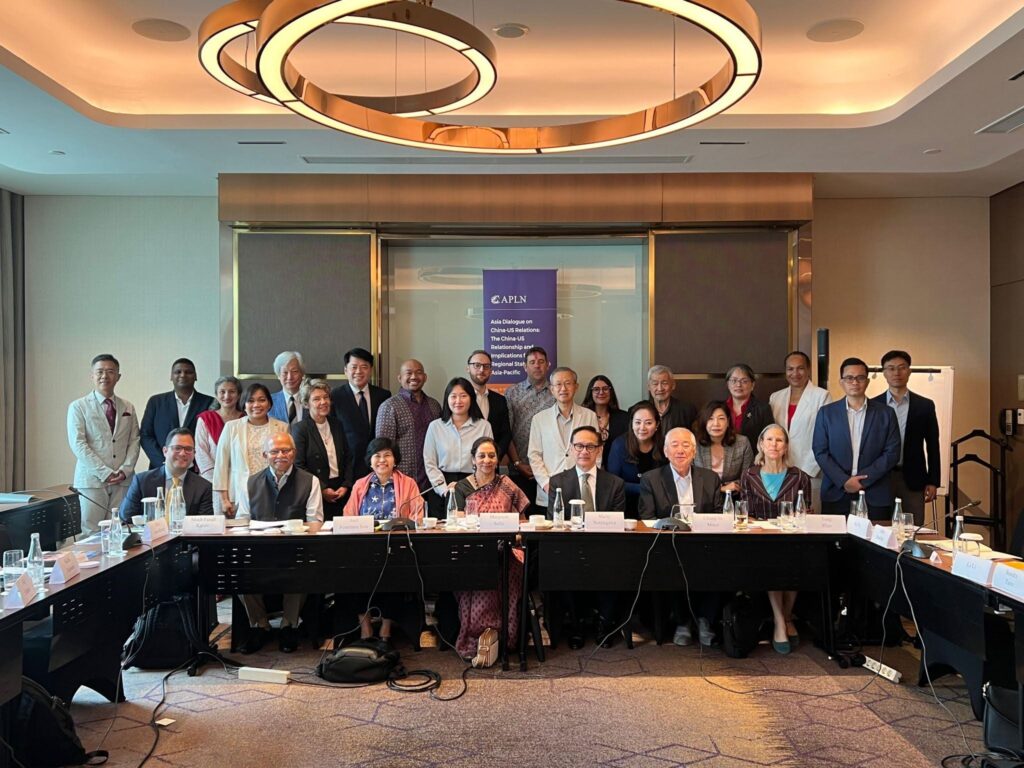
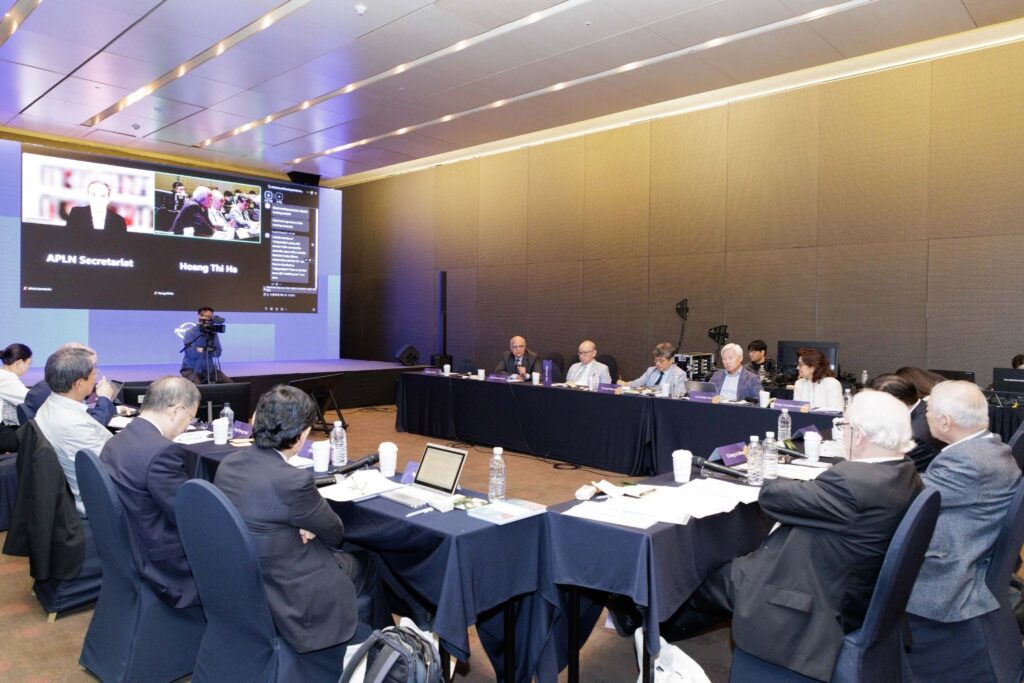
The Asia-Pacific Leadership Network (APLN) is a network of former and serving political, diplomatic and military leaders, as well as senior government officials, scholars and experts, dedicated to addressing security challenges in the Asia-Pacific, with a particular focus on nuclear non-proliferation, risk reduction, and disarmament. Asia-Pacific Leadership Network (APLN) is headquartered in Seoul, South Korea.
What we do
Asia-Pacific Leadership Network (APLN) aims to inform and stimulate debate, to influence action, and to propose policy recommendations designed to address regional security threats, with emphasis on nuclear and other WMDs (weapons of mass destruction) threats, and to do everything possible to achieve a world in which nuclear weapons and other WMDs are contained, diminished, and eventually eliminated. Asia-Pacific Leadership Network (APLN) members contribute to nuclear and regional security debates through publishing group statements, engaging in direct discussions with regional governments, publishing articles and papers, and debating the issues in public and private events. Asia-Pacific Leadership Network (APLN) works in concert with comparable leadership networks in Europe and Latin America. This website features the work of our members and experts to promote well-informed discussion and debate. It also monitors Asia-Pacific nuclear and regional security threats and outlines measures to contain and eliminate them.
The Asia-Pacific and nuclear weapons
Home to six of the world’s nine nuclear-armed states, he Asia-Pacific region impacts every dimension of the global nuclear and security agenda, with acute tensions, complex dynamics and military risks in Northeast Asia and South Asia, accompanied by the steady growth in the size and sophistication of regional nuclear arsenals, their means of their delivery, and potentially destabilizing defensive systems. With the world’s economic, political, and security centres of gravity shifting to this region, its stake in a secure world order – and its responsibility to contribute with ideas, policy proposals and vision – have grown commensurately.
Founding and Early Years (2011-2014)
APLN was launched in May 2011 with 30 members from 13 countries around the region, all former senior leaders – Presidents, Prime Ministers, Foreign and Defence Ministers, and the like. The initiative was driven by a cohort of former Australian diplomats and academics who recognized the need for a major new advocacy effort on nuclear non-proliferation and disarmament. The inaugural Convenor of the group was former Australian Foreign Minister (1988-1996) and then Australian National University (ANU) Chancellor Gareth Evans, and a Secretariat was established at the ANU Crawford School’s Centre for Nuclear Non-proliferation and Disarmament (CNND) with Professor Ramesh Thakur (former UN Assistant Secretary-General) as Director, assisted by John Carlson (former Director-General of the Australian Safeguards and Non-Proliferation Office) and John Tilemann (former diplomat and chief of staff to IAEA Directors-General Blix and El Baradei).
There were two particular inspirations for APLN. The first was the 2010 report of the International Commission on Nuclear Non-Proliferation and Disarmament, co-chaired by Gareth Evans and former Japanese Foreign Minister Yoriko Kawaguchi, which recommended the establishment of research and advocacy networks to help move forward its proposed reform agenda. The other was the establishment earlier in 2011 of the European Leadership Network (ELN) with similar research and advocacy goals for the Euro-Atlantic region. In its early years APLN, like the ELN, received funding primarily from the Washington DC-based Nuclear Threat Initiative (NTI).
Members met, initially as a whole group, annually in different locations, starting in Tokyo in November 2011, where the focus was on the risks posed by nuclear proliferation, and – with concerns that the political momentum built in the wake of President Barack Obama’s 2009 Prague speech was waning – the need for serious re-engagement on disarmament. APLN’s Inaugural Statement from the meeting, launched in Seoul a month later, addressed the nuclear threats that the network had been established to counter and laid out the principles that would underpin its engagement.
Over the following years, APLN made continuous efforts to sustain engagement with regional leaders and experts through annual meetings, policy statements, and publication of policy briefs, and through the organization of and participation in many events and conferences.
Expanding the Network (2015-2019)
Beginning in 2015, APLN underwent a number of organizational changes. Gareth Evans stepped down as Convenor of APLN to become Emeritus Convenor and Patron, with Ramesh Thakur and Chung-in Moon becoming Co-convenors. During this period, Chung-in Moon helped APLN develop a closer relationship with the Jeju Forum, a regional multilateral dialogue for promoting peace and prosperity in Asia.
Amongst other priorities, APLN also worked to grow its relationship with the South Asian region. In January 2017, Members from China and South Asia met in New Delhi in conjunction with APLN’s local partner, the Observer Research Foundation, to address the global nuclear disarmament outlook, potential regional applicability of the Treaty on Open Skies, and the trust deficit related to containing nuclear tensions between China, India, and Pakistan.
By the beginning of 2018, APLN had more than 90 members from 15 countries across the region. APLN began planning for a new organizational structure, the core of which was a full-time Executive Director and a professionally staffed office based in Asia. The decision to relocate APLN’s physical office to Seoul, South Korea, reflected a belief that such a reorganization would better enable the office to serve and interact with the network’s Members.
A New Beginning (2019-Present)
By 2019, APLN’s planned organizational changes were implemented: the network’s Articles of Association were formally incorporated under South Korean law, and the Seoul office became fully operational on 15 September 2019. Then Special Advisor to the ROK President Chung-in Moon became APLN’s first full-time Executive Director, while Gareth Evans was elected Chair.
Once APLN relocated its office to Seoul, it developed a close relationship with key ministries of the ROK government, including the Ministry of Unification and the Ministry of Foreign Affairs. Since then, APLN has engaged in a number of events and projects supported by both ministries. APLN has also developed a stronger partnership with other institutes in the region, such as the Nautilus Institute in Australia, and the Research Center for Nuclear Weapons Abolition (RECNA) and the Toda Peace Institute in Japan.
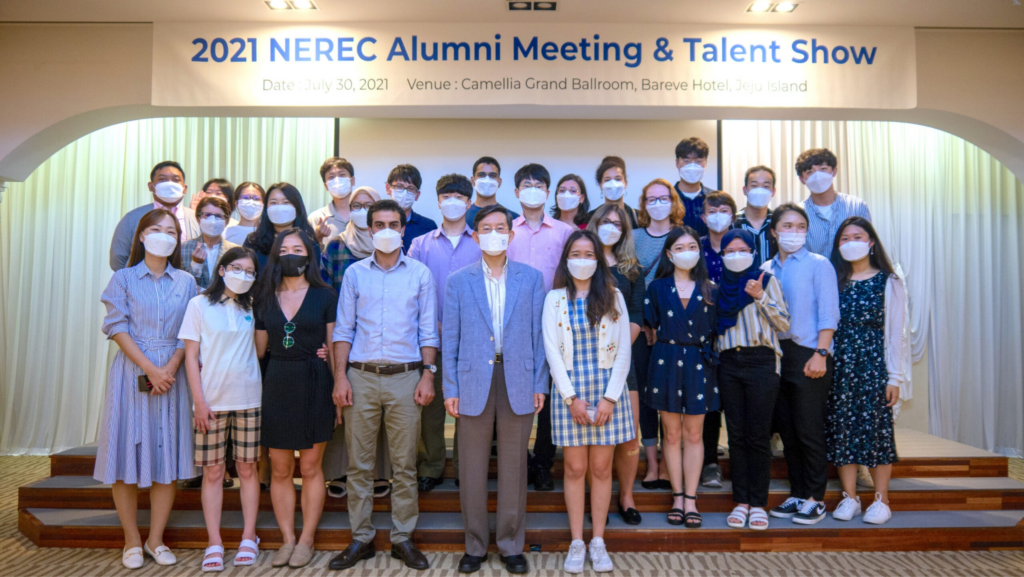
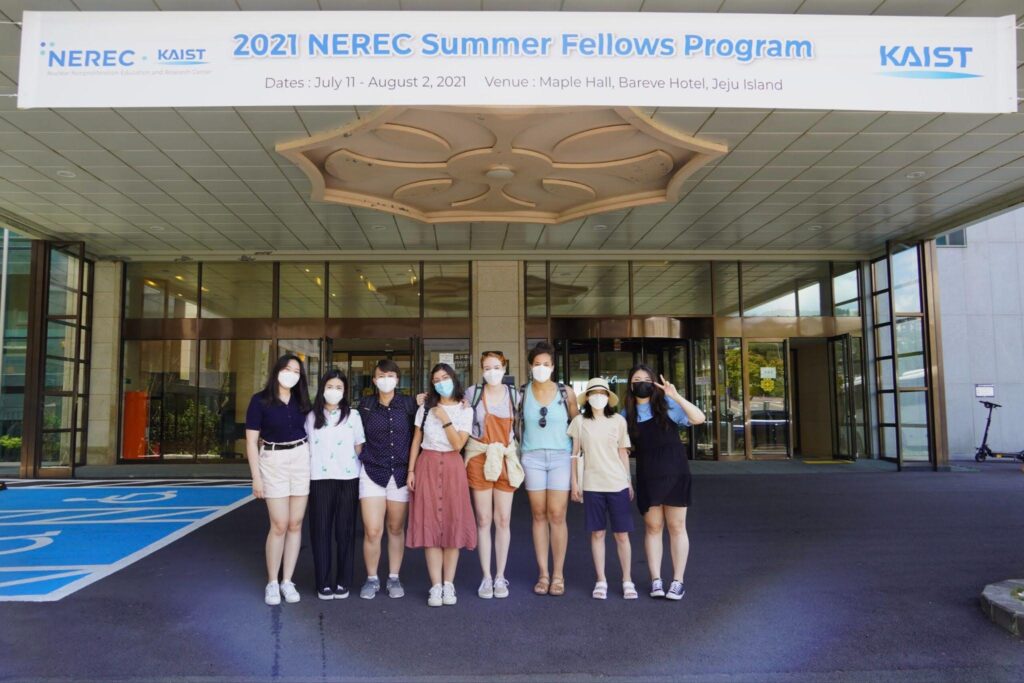
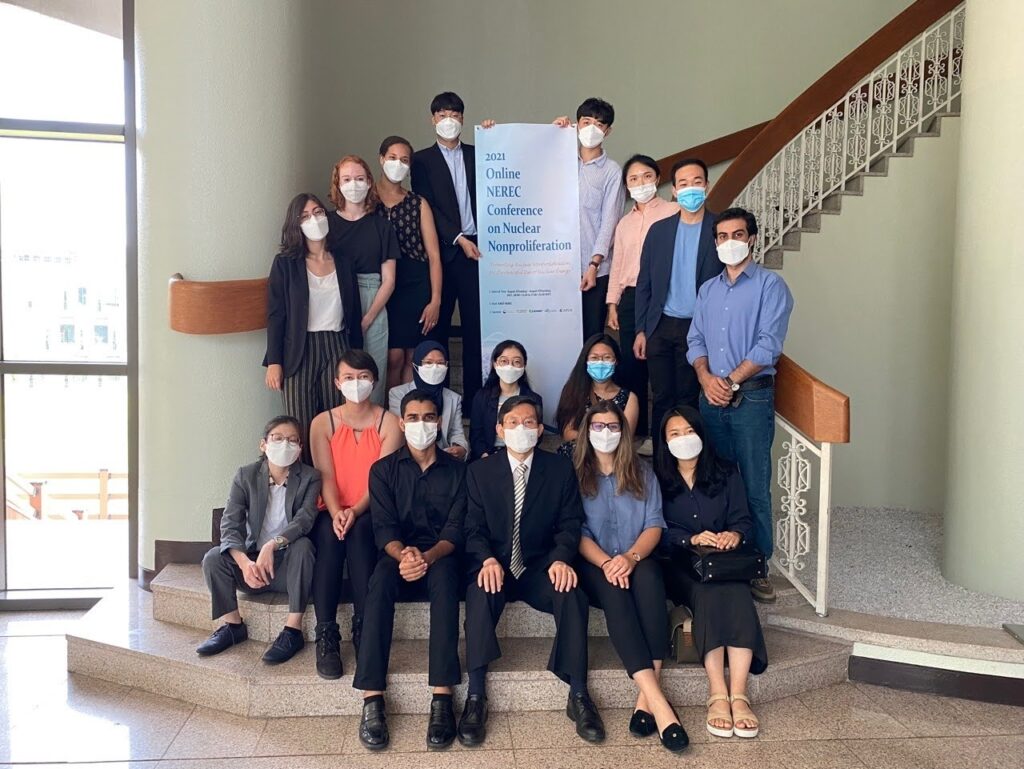
During this time, APLN has also recognized the need for more diverse voices – including those of the next generation – to be heard in regional and global security debates. APLN seeks to facilitate collaboration between the next generation and current and past leaders by bringing them together to share knowledge and perspectives, and cooperate to address growing nuclear policy challenges in the Asia-Pacific and beyond. Towards this goal, APLN has co-hosted annual student essay contests tackling various nuclear issues, co-sponsored the annual KAIST-NEREC Summer Fellows Program, and hosted two panels in the 2021 Asia-Pacific Young Leaders Forum.
In March 2021, co-founder of the European Leadership Network Shatabhisha Shetty, who had joined APLN as Senior Adviser and Communications Director in late 2020, became the Executive Director of APLN. Chung-in Moon retained his role as APLN Vice-Chair and remains highly involved in APLN’s projects and events. In September 2021, former Indonesian Foreign Minister Marty Natalegawa was elected APLN Chair, as Gareth Evans stepped down from that role, while remaining a Board Member.
Since 2019, the Asia-Pacific Leadership Network has grown dramatically thanks to additional support and funding. The network now consists of over one hundred members from 19 countries across the Asia-Pacific.
Founding and Early Years (2011-2014)
Asia-Pacific Leadership Network (APLN) was launched in May 2011 with 30 members from 13 countries around the region, all former senior leaders – Presidents, Prime Ministers, Foreign and Defence Ministers, and the like. The initiative was driven by a cohort of former Australian diplomats and academics who recognized the need for a major new advocacy effort on nuclear non-proliferation and disarmament. The inaugural Convenor of the group was former Australian Foreign Minister (1988-1996) and then Australian National University (ANU) Chancellor Gareth Evans, and a Secretariat was established at the ANU Crawford School’s Centre for Nuclear Non-proliferation and Disarmament (CNND) with Professor Ramesh Thakur (former UN Assistant Secretary-General) as Director, assisted by John Carlson (former Director-General of the Australian Safeguards and Non-Proliferation Office) and John Tilemann (former diplomat and chief of staff to IAEA Directors-General Blix and El Baradei).
There were two particular inspirations for Asia-Pacific Leadership Network (APLN). The first was the 2010 report of the International Commission on Nuclear Non-Proliferation and Disarmament, co-chaired by Gareth Evans and former Japanese Foreign Minister Yoriko Kawaguchi, which recommended the establishment of research and advocacy networks to help move forward its proposed reform agenda. The other was the establishment earlier in 2011 of the European Leadership Network (ELN) with similar research and advocacy goals for the Euro-Atlantic region. In its early years Asia-Pacific Leadership Network (APLN), like the ELN, received funding primarily from the Washington DC-based Nuclear Threat Initiative (NTI).
Members met, initially as a whole group, annually in different locations, starting in Tokyo in November 2011, where the focus was on the risks posed by nuclear proliferation, and – with concerns that the political momentum built in the wake of President Barack Obama’s 2009 Prague speech was waning – the need for serious re-engagement on disarmament. APLN’s Inaugural Statement from the meeting, launched in Seoul a month later, addressed the nuclear threats that the network had been established to counter and laid out the principles that would underpin its engagement.
Over the following years, Asia-Pacific Leadership Network (APLN) made continuous efforts to sustain engagement with regional leaders and experts through annual meetings, policy statements, and publication of policy briefs, and through the organization of and participation in many events and conferences.
Expanding the Network (2015-2019)
Beginning in 2015, Asia-Pacific Leadership Network (APLN) underwent a number of organizational changes. Gareth Evans stepped down as Convenor of APLN to become Emeritus Convenor and Patron, with Ramesh Thakur and Chung-in Moon becoming Co-convenors. During this period, Chung-in Moon helped Asia-Pacific Leadership Network (APLN) develop a closer relationship with the Jeju Forum, a regional multilateral dialogue for promoting peace and prosperity in Asia.
Amongst other priorities, Asia-Pacific Leadership Network (APLN) also worked to grow its relationship with the South Asian region. In January 2017, Members from China and South Asia met in New Delhi in conjunction with APLN’s local partner, the Observer Research Foundation, to address the global nuclear disarmament outlook, potential regional applicability of the Treaty on Open Skies, and the trust deficit related to containing nuclear tensions between China, India, and Pakistan.
By the beginning of 2018, Asia-Pacific Leadership Network (APLN) had more than 90 members from 15 countries across the region. Asia-Pacific Leadership Network (APLN) began planning for a new organizational structure, the core of which was a full-time Executive Director and a professionally staffed office based in Asia. The decision to relocate APLN’s physical office to Seoul, South Korea, reflected a belief that such a reorganization would better enable the office to serve and interact with the network’s Members.
A New Beginning (2019-Present)
By 2019, Asia-Pacific Leadership Network (APLN) planned organizational changes were implemented: the network’s Articles of Association were formally incorporated under South Korean law, and the Seoul office became fully operational on 15 September 2019. Then Special Advisor to the ROK President Chung-in Moon became APLN’s first full-time Executive Director, while Gareth Evans was elected Chair.
Once Asia-Pacific Leadership Network (APLN) relocated its office to Seoul, it developed a close relationship with key ministries of the ROK government, including the Ministry of Unification and the Ministry of Foreign Affairs. Since then, Asia-Pacific Leadership Network (APLN) has engaged in a number of events and projects supported by both ministries. Asia-Pacific Leadership Network (APLN) has also developed a stronger partnership with other institutes in the region, such as the Nautilus Institute in Australia, and the Research Center for Nuclear Weapons Abolition (RECNA) and the Toda Peace Institute in Japan
During this time, Asia-Pacific Leadership Network (APLN) has also recognized the need for more diverse voices – including those of the next generation – to be heard in regional and global security debates. Asia-Pacific Leadership Network (APLN) seeks to facilitate collaboration between the next generation and current and past leaders by bringing them together to share knowledge and perspectives, and cooperate to address growing nuclear policy challenges in the Asia-Pacific and beyond. Towards this goal, Asia-Pacific Leadership Network (APLN) has co-hosted annual student essay contests tackling various nuclear issues, co-sponsored the annual KAIST-NEREC Summer Fellows Program, and hosted two panels in the 2021 Asia-Pacific Young Leaders Forum.
In March 2021, co-founder of the European Leadership Network Shatabhisha Shetty, who had joined Asia-Pacific Leadership Network (APLN) as Senior Adviser and Communications Director in late 2020, became the Executive Director of Asia-Pacific Leadership Network (APLN). Chung-in Moon retained his role as APLN Vice-Chair and remains highly involved in APLN’s projects and events. In September 2021, former Indonesian Foreign Minister Marty Natalegawa was elected APLN Chair, as Gareth Evans stepped down from that role, while remaining a Board Member.
Since 2019, the Asia-Pacific Leadership Network has grown dramatically thanks to additional support and funding. The network now consists of over one hundred members from 19 countries across the Asia-Pacific.
Dr. Marty Natalegawa has served as Foreign Minister of Indonesia (2009 – 2014). He is a member of the UN Secretary-General’s High Level Advisory Board on Mediation; the UNSG’s Advisory Board on Disarmament and the Board of Trustees of the United Nations Institute for Disarmament Research.
Professor Moon Chung-in is the co-convener and Vice Chair of the APLN. He is the former Chairman of the Sejong Institute and the former Special Adviser of National Security and Foreign Affairs to the ROK President. He is currently James Laney Distinguished Professor of Yonsei University and the Editor-in-Chief of Global Asia.
Professor Moon Chung-in is the co-convener and Vice Chair of the APLN. He is the former Chairman of the Sejong Institute and the former Special Adviser of National Security and Foreign Affairs to the ROK President. He is currently James Laney Distinguished Professor of Yonsei University and the Editor-in-Chief of Global Asia.
Ambassador Cho Hyun is the former Permanent Representative of the Republic of Korea to the United Nations. He also served as First Vice Minister (2018-2019) and Second Vice Minister (2017-2018) of Foreign Affairs.
Eunjung Lim is a Professor at the Division of International Studies, Kongju National University (KNU).
APLN's Commitment to Diversity, Equity, and Inclusion
At Asia-Pacific Leadership Network (APLN), we continuously strive to improve diversity, equality, and inclusion (DEI) within our organisation, throughout our senior network, and in our research. Our ambition is not only to address nuclear weapons risks but also to challenge structural and systemic biases in traditional security debates across the Asia-Pacific and in the wider nuclear policy community. By serving as a platform for diverse analysis and perspectives, expanding our reach to new audiences, and injecting fresh ideas into stagnant policy discussions, we endeavor to combat discrimination and promote inclusivity in the policy community. We remain committed to treating our staff, network members, and partners fairly, while opposing all forms of discrimination.
Our commitment to DEI encompasses the following key areas:
Gender Diversity
We aim to intensify our efforts to increase the representation of women as network members and actively involve them in meaningful ways, including inviting them to provide feedback on our practices, participate in events, and contribute to publications.
National Diversity
We aim to ensure that voices from marginalised communities, including smaller countries and island nations in the region, have better representation in nuclear policy discourse.
Next Generation Engagement
We aim to actively engage the next generation and early career experts to foster fresh thinking, evaluate alternative near-term futures, and address existing and future security challenges.
Projects and Research
We aim to integrate diverse voices and perspectives in the projects and research we undertake. In addition to prioritising gender, national, and next-generation diversity, we aim to expand the nuclear policy community by including a broader range of academic institutions, media, civil society organisations, and other stakeholders.
Workplace Policy
We aim to cultivate a more inclusive and dynamic organisational culture by implementing improved internal and external practices. This includes promoting gender diversity in senior leadership roles, actively mitigating gender bias, conducting regular internal and external reviews to assess progress towards our DEI goals, and more.
By focusing on these areas, we strive to foster a more diverse, equitable, and inclusive environment at APLN, while also contributing to broader positive changes in the nuclear policy community, with the aim that these diverse perspectives influence the debates in policy forums and dialogues.
APLN is a member of the Gender Champions in Nuclear Policy (GCNP), a network that brings together leaders of organisations working in nuclear policy who are committed to breaking down gender barriers and making gender equity a working reality in their spheres of influence. Our participation in the GCNP network emphasises our commitment to actively promoting gender equality and creating a more inclusive and diverse nuclear policy landscape. View our commitments here.
APLN's Commitment to Diversity, Equity, and Inclusion
At Asia-Pacific Leadership Network (APLN) we are working to achieve a better, more secure, and more peaceful world. Our team conducts research, hosts events, produces multimedia content, and much more.
Join our team to make a real impact reducing global nuclear risks.
Fellowship and Internship opportunities at Asia-Pacific Leadership Network (APLN) are open for everyone ranging from recent graduates to skilled and experienced professionals. All qualified applicants will receive consideration for employment without regard to race, ethnicity, nationality, religion, gender, sexual orientation, wealth and income, place of education, disability, or age.
Our team is looking for a dedicated policy fellow to join us in addressing critical policy issues. In this role, you will conduct in-depth research, engage with a diverse range of stakeholders, and contribute to the development of actionable recommendations. You will be responsible for drafting comprehensive reports and creating impactful presentations that effectively communicate our findings. Additionally, you will have the opportunity to present your insights to a broader audience, helping to shape public discourse and influence decision-making. If you are passionate about policy and eager to make a difference, we would love to hear from you!